
How to Fight in Scavland
Aim, suppress, melee, or leave. Reloading is not a personality.
Scavland combat is tactical because the economy is cruel. Ammo is scarce, guns jam, and a dirty rifle can cook off into scrap. You have firearms, melee, stealth, and suppression. The correct tool is the one that spends the least and still lets you walk home. Read survival first if your bars are already red. Read stealth if you would rather not announce the fight.
The rules of a firefight
Public AI does not lemming into your barrel. Humans take cover, flee when hurt, and reposition. That is impressive in a top-down pixel game and dangerous for players who spray. Every missed shot is food you did not buy.
Right-click aimed fire appears in keyboard videos as a zoom that steadies the shot. Use it. Hip fire is for things already in your face. F is melee: a finishing tool and a panic button, not a build until you have no ammo. E interacts. Do not bind your brain so that every key is shoot.
Line of sight and cover matter. A sprite wall is a wall. Peek, shoot, step back. Suppression exists as a named system on the Steam page: you can pin people, not only delete them. Pinning is how you move, loot, or leave.
Weapons are mortal
Condition is a combat stat. A pristine assault rifle is a different gun from the same model with a dirty bolt. Jams happen mid-fight. Worst case, the weapon becomes scrap. Cleaning kits belong in the pack you take to a fight, not in the stash you meant to visit later. Field repairs work; workbenches are faster. That is why Getting Started nags you about kits.
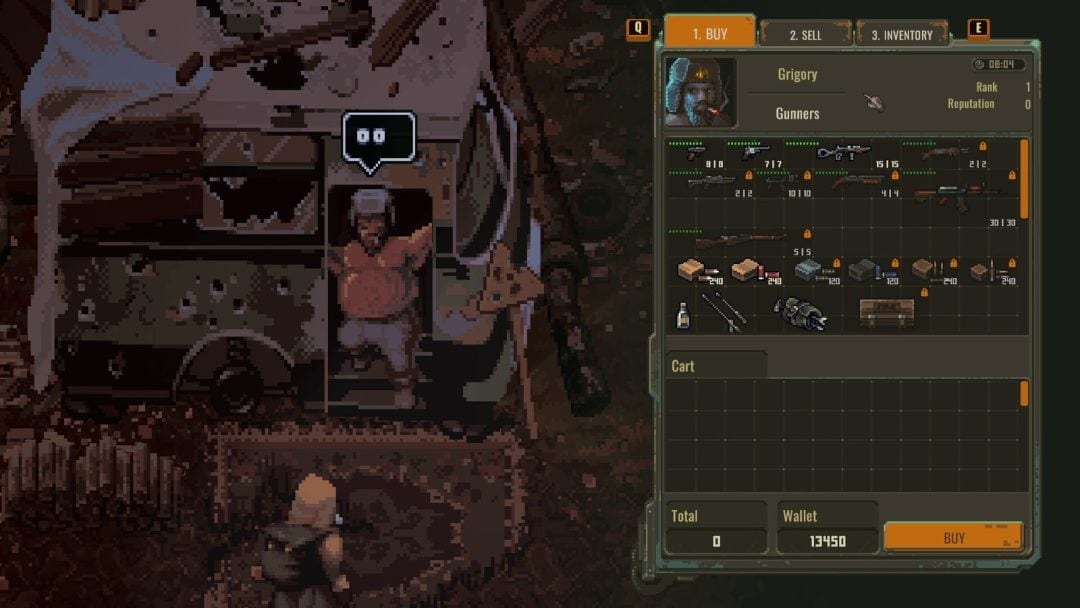
Calibres do not mix in your dreams. Pistol ammo is not rifle ammo. Demo traders sell a three-line rifle with a five-round magazine next to an AK-pattern Mika 47 that eats the ammo you actually find. The weapon tier list ranks roles. This page only insists you bring the ammo for the gun in your hands.
Attachments change the argument: stocks, magazines, optics, muzzles, grips, hundreds of parts. A long mag is a combat choice. A suppressor, if you find one, is a stealth choice. Do not build a parade rifle you cannot feed. Builds covers playstyles after you can survive a magazine.
Enemies you will actually meet
- Small mutants and rats: parts, noise, and job fodder. They still bite.
- Larger abominations: demo footage names things like Veles near factories. Treat named monsters as boss-adjacent. Bring a plan.
- Hostile survivors and bandits: they shoot back, bleed you, and drop guns worth more than theirs if you did not ruin yours.
- Patrol squads: job targets that can spawn anywhere. Distance raises pay. It also raises the walk of shame if you wipe.
Mutant parts are loot. Human kits are loot. Your corpse is also loot in the sense that you will have to get back to it with a worse gun. Single-player persistence means the fight is never a round reset. It is a hole in your week.
Melee, suppression, and when not to shoot
Melee on F is quiet compared with a homemade pistol, which creators describe as good for making noise and little else. If the pistol is a firework, do not light it next to a bunker hatch. Suppress, then close, or skip the fight. Stealth is how you steal the shotgun instead of testing it from the wrong side.
Suppression is the adult version of spray. Hold a lane. Let a partner AI enemy reposition into a worse tile. You do not have a partner. You have terrain. Use doors, water (knowing radiation is a tax), and night. Survival explains why the pond is not free cover.
Bunkers are combat arenas with extra lies
Procedural bunkers add armories, event rooms, and enemies that do not belong on the road. Flickering lights, dense corridors, unique spawns. This is where ammo discipline dies if you let it. Clear a room, listen, do not reload in the doorway, and keep a path to the hatch. A jammed unique rifle in a dead end is a comedy sketch you will not laugh at.
Surface fights can be walked around. Hatch fights often cannot. Pack more meds than you think, and one more cleaning kit than that.
After the gunfire
Bleed first. Bandage. Then loot. Then clean the gun. Then eat. The order is medical, mechanical, metabolic, greedy. Selling a broken pistol in town is traders work. Dumping it to pick up a shotgun you cannot feed is how you meet the next patrol empty.
If a fight started because you walked into a faction’s mood, that is a reputation problem wearing a bullet. Do not solve politics only with rifles unless you like shopping at one store forever.
Combat in Scavland is available everywhere and affordable almost nowhere. Shoot less than you want. Aim more than you think. Leave when the magazine starts to feel like a personality test.
Frequently Asked Questions
Quick answers to the most common questions.
Why does my gun jam in Scavland?
Weapons have durability. Dirty or damaged guns jam and can even cook off into scrap. Carry a cleaning kit and repair at workbenches when you can.
Is melee viable?
Melee on F is a real tool for finishes and silent work. It is not a replacement for a maintained rifle in open ground. Pair it with stealth.
How do I beat human patrols?
Use cover, aimed fire, and suppression. They take cover and retreat when hurt. Do not stand in the open dumping a magazine. Ammo is the real health bar.
Should I shoot everything I see?
No. Some silhouettes are faction politics. Some are jobs. Some are not worth the bullets. Walk around fights that do not pay.