
Getting Started in Scavland
Survive the first hour as a Vulture before the wasteland notices you.
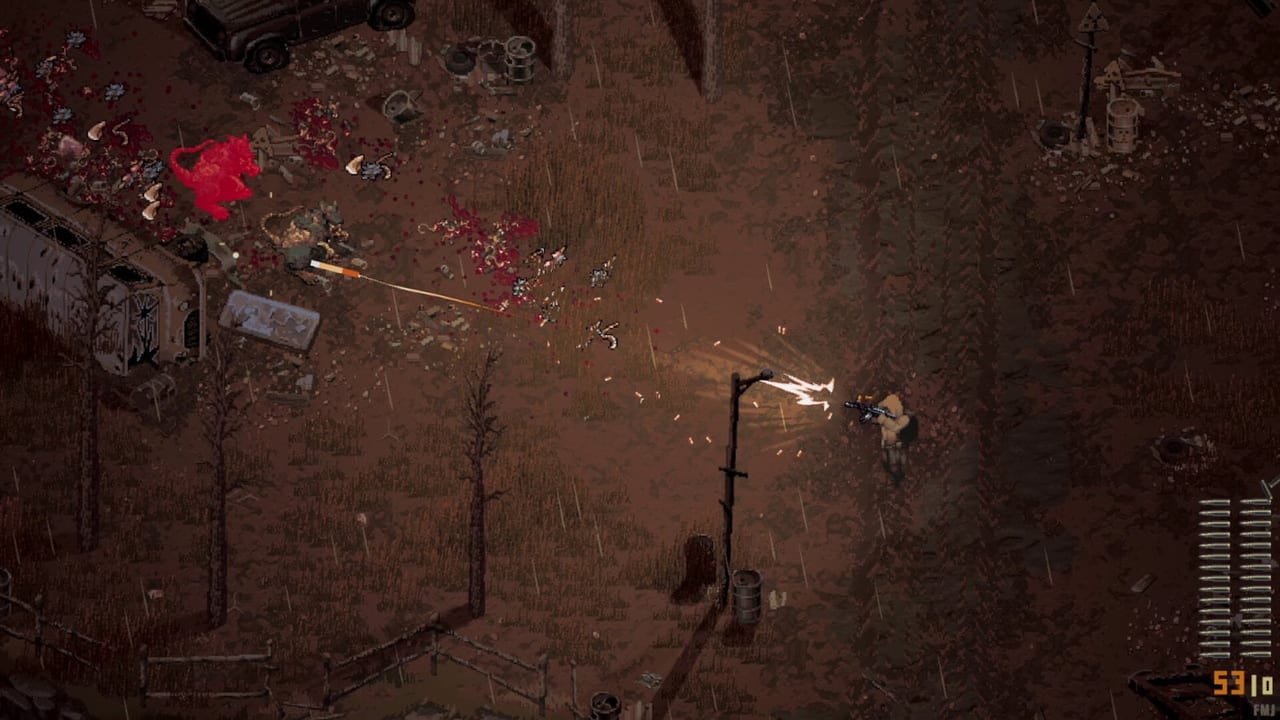
Scavland does not ease you in with a power fantasy. You are a Vulture: a scavenger at the bottom of Zalesye’s broken order, shot, hungry, and already in debt to the world. Early Access is scheduled for 4 September 2026, but the first hour has been public for a long time through demos and creator footage. This page is the practical version of that hour.
If you only read one companion page after this one, make it survival. Guns come later. So do factions. The first job is not dying on the road back to town.
What you are
A Vulture lives on what the old world left behind. You take jobs, loot abandoned rooms, and sell junk to people who still have a roof. You are not a chosen hero and you are not an operator dropped into a raid. Public builds start you wounded, with a backpack and a short list of chores. Treat that as the thesis of the game: every trek is a risk, ammunition is scarce, and preparation decides whether you return.
NoShadow has been clear that Scavland is a single-player open world, not an extraction shooter. Your save follows you. So do radiation, the Mist, and whatever you failed to repair. That is why this beginner guide spends more words on habits than on a loot route.
The scrapyard hour
Public gameplay opens near a scrapyard with a tutorial that talks like a notebook, not a pop-up. Typical first tasks:
- Open the quest book with J and read the actual page. It is a physical journal, not a floating marker list.
- Check the backpack. Creators often dump it on the ground and rummage. Know what you are carrying before you walk.
- Use a medkit. Right-click is the use/aim pattern in keyboard footage. Heal before you explore.
- Deal with hunger. The tutorial will tell you that you have not eaten. Food is a timer, not flavour text.
- Interact with objects using E, melee with F, and do not assume every red thing is loot.
Those keys are confirmed in public videos and collected on the controls page. Bindings may change; the habit should not: journal first, vitals second, greed last.
Leave town with a plan
Once the scrapyard lets you go, the temptation is to walk toward the first interesting silhouette. Do not. Zalesye gets more dangerous the farther you travel. Pack as if you will be interrupted:
- A stacked medkit and at least one bandage. Bleeding shows up in bandit fights.
- Food and water, not just ammo. Survival explains why a swamp shortcut is a radiation tax.
- A cleaning kit. Weapon durability is real. A jam in a bunker is how runs end. Repairs go faster at a workbench or rest area.
- Empty weight. Early backpacks fill with scrap that looks valuable and is not. Sell red cloth and junk in town; keep tools.
The starting loadout page ranks what to keep from the first corpses. An early AK-pattern rifle (creators call it a Mika 47 or Kalashnikov 47) is common. Homemade pistols exist to make noise. Shotguns appear later. Do not vendor a cleaning kit to afford a pretty gun.
People before mutants
Town is not a menu. Talk to NPCs. The Rada, Gunners, and Mudlarks are named on the Steam page; more groups exist. A farmer will buy scrap. A priest or organiser may send you northwest to warn the Mudlarks. Those jobs teach the map: Arcadia to the west, Dazbog Hollow on the way north, Tdola as a place of corpses, Lake Pavi as a destination you hear about before you see it.
You do not need a full reputation plan on day one. You need to know that shops hide stock behind rank, and that shooting the wrong patrol is a political choice. Read factions before you pick a side for coin.
Combat you can afford
The first firefight should be a fight you chose. Public AI takes cover, flees when hurt, and repositions. Rats and small mutants drop parts. Human squads are a job type of their own. If you dump a magazine into the first silhouette, you will be empty when the second one stands up.
Use combat for suppression, jams, and melee. Use stealth when the pistol is bad, which it often is. Right-click aimed fire exists in keyboard footage and is worth the slower walk.
A first-day loop that works
- Heal, eat, and read the journal.
- Sell junk, buy food, water, and a spare cleaning kit.
- Take a nearby job, not the farthest marker. Distance raises pay and also raises the chance you never collect it.
- Return at the first serious bleed or jam. Pride is not a save file.
- Only then look at bunkers or a long walk south toward a Threshold.
If you still have the 2025 demo installed, the demo page explains what that slice still teaches. Systems expanded after that build: more weapons, attachments, a larger world, and procedural bunkers. Do not treat demo loot tables as Early Access law.
What this wiki will not tell you yet
Act I story beats beyond the public premise stay off this page. The east beyond highway RO-29, the promised land, and the soldiers who shot you are hooks, not a walkthrough. When patches land, update notes will live under updates. Until 4 September 2026, use this guide as launch prep, verify specs on the system requirements page, and keep the beginner checklist next to the Steam overlay.
Scavland is slow on purpose. The players who last are the ones who treat the first hour like a trade, not a highlight reel.
Frequently Asked Questions
Quick answers to the most common questions.
What is a Vulture in Scavland?
A Vulture is the player role: a scavenger living on old-world salvage in Zalesye. You take jobs, fight mutants and hostile survivors, and try to earn enough gear to push farther from town.
What should I do first in Scavland?
Open the journal with J, heal, eat, and sell junk before a long walk. Follow this page, then the beginner checklist and survival.
Is there a tutorial?
Yes. Public builds start in a scrapyard with a quest book, backpack check, medkit, and hunger prompt. It is short. The rest of the difficulty is the open world.
Should I play the old demo before Early Access?
It is optional. The demo page explains what that 2025 slice taught. Early Access is a larger Act I build, not a copy of the Next Fest demo.