
Scavland vs Zero Sievert
Two top-down survival games. One comparison worth reading.
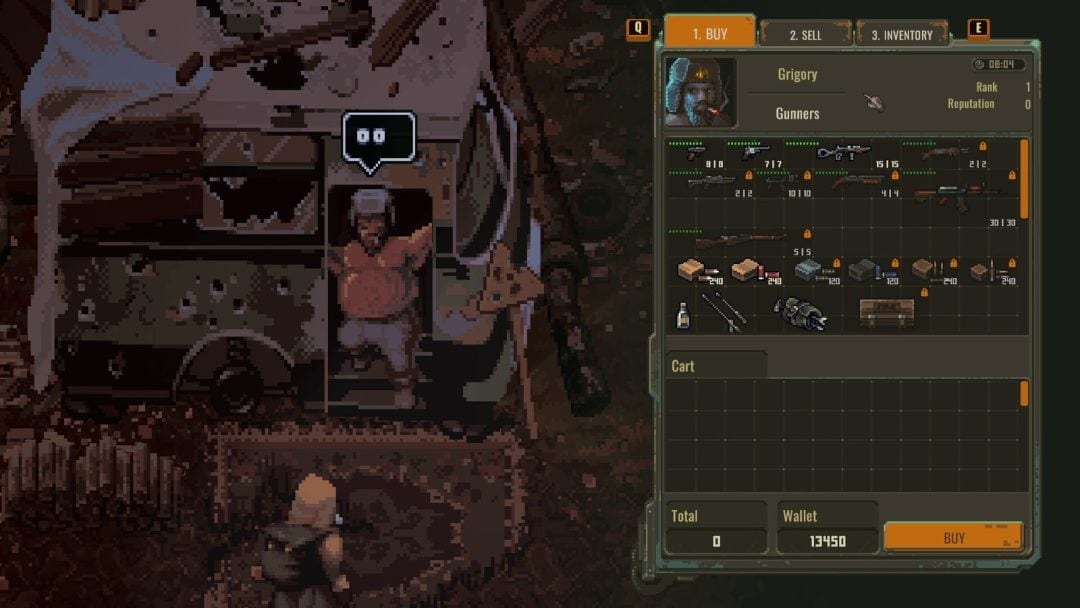
Scavland and Zero Sievert are both hardcore top-down pixel-art survival games set in post-apocalyptic worlds. They share DNA. They are not the same game. This page is the honest comparison based on what has been published about Scavland’s Early Access build and what Zero Sievert players already know. If you have played Zero Sievert and wonder what Scavland changes, this page is for you.
1. Ballistics and weapon systems
Zero Sievert has a detailed ballistics system where bullets behave differently based on calibre, distance, and body part. Scavland’s weapon tier list ranks by ammo economy and role, not raw ballistics. Early Access lists 25+ weapons and 300+ attachments. The exact ballistics depth in Scavland is not publicly confirmed in the same detail as Zero Sievert’s system.
If ballistics depth is your reason for loving Zero Sievert, treat Scavland as a different system with different satisfactions.
2. Attachments and customisation depth
Both games share attachment customisation as a core loop. Scavland’s 300+ attachments cover stocks, magazines, optics, muzzles, and grips. The builds page covers how Scavland approaches customisation.
Zero Sievert’s attachment system is known for depth and complexity. Scavland’s Early Access system is confirmed to be large in count but its exact depth versus Zero Sievert’s is not a direct comparison this wiki can make from public data.
3. The Mist versus anomaly weather
Zero Sievert has its own environmental hazard systems. Scavland’s Mist is a specific phenomenon tied to southern Thresholds, with fog that creeps across the landscape, affects corpses and creatures, and creates artifact spawn conditions.
The Mist is not identical to Zero Sievert’s anomaly weather. It has specific mechanics: gas mask filter degradation, artifact connections, and a creeping movement pattern. The Anomaly Scanner page covers Scavland’s artifact-detection system.
4. World size and handcrafted versus procedural
Scavland is described as a handcrafted open world roughly three times larger than its own demo, with settlements, roads, faction territories, and hidden places. Underground bunkers are procedural. Zero Sievert’s world structure is different in scale and design.
Scavland’s surface world is authored. Roads, towns, and zones are placed by designers. The underground is where procedural generation lives.
5. Faction systems
Zero Sievert has its own faction and NPC systems. Scavland’s ten confirmed factions include Rada, Commonfolk, Acolytes, Mechanists, Palatines, Gunners, Strelki, and Mutniki, with a dynamic reputation system. The factions page covers the confirmed groups.
Both games use faction standing to gate shop stock and quest access. The specific mechanics differ in detail.
6. Co-op and multiplayer
Zero Sievert has co-op. Scavland’s co-op mode is a future plan, not an Early Access feature. The first build is single-player PvE. The roadmap includes co-op as something planned for after the initial Early Access period.
If co-op is a requirement, Scavland does not have it yet. Zero Sievert does.
7. Early Access status and stability
Zero Sievert has been in active development and has an established player base. Scavland launched its Early Access on 4 September 2026 with Act I and a day-one patch already applied. The updates hub covers the launch state.
Scavland is a six-year project from NoShadow entering its public phase. Zero Sievert is a more mature product. This comparison is between two games at different stages, which affects what “complete” means for each.
What Scavland does differently
- The Mist as a specific environmental phenomenon with artifact connections
- Ten named factions with a published roster at launch
- Handcrafted surface world with procedural underground
- A story structure planned across three acts
- No co-op at launch; roadmap plans it for later
What they share
- Top-down pixel-art survival RPG genre
- Hardcore resource management
- Inventory as a core mechanic
- Faction and reputation systems
- Attachment and weapon customisation
- Dangerous wasteland that punishes overconfidence
Bottom line
If you want Zero Sievert with a different world, new factions, and a fresh story, Scavland is that. If you want Zero Sievert’s exact ballistics depth and co-op now, play Zero Sievert. Scavland is a foundation with a 12-24 month Early Access plan, not a finished product. Treat it accordingly.
For Scavland’s own system requirements and Early Access details, read the relevant pages.
Frequently Asked Questions
Quick answers to the most common questions.
Is Scavland just a Zero Sievert clone?
No. They share the top-down survival RPG genre and pixel art style, but Scavland has its own Mist mechanics, factions, world structure, and story. The comparison page above details seven core differences.
Does Scavland have better ballistics than Zero Sievert?
This wiki cannot confirm that from public data. Scavland has 25+ weapons and 300+ attachments. The exact ballistics depth compared to Zero Sievert's system is not verified here.
Can I play co-op in Scavland?
Not in Early Access. Co-op is a future plan in the roadmap. Scavland launched as single-player PvE on 4 September 2026. See the roadmap.
Should I buy Scavland if I love Zero Sievert?
If you want a fresh world, new factions, and a different story with similar survival DNA, yes. If you need co-op now and Zero Sievert's exact systems, play Zero Sievert. See the full comparison above.